



By Dellendo Farquharson
Published: April 20, 2026
Falling behind on taxes is more common than many Canadians realize—and in 2026, the consequences of late filing are more costly than ever. With ongoing CRA enforcement, elevated interest rates, and tighter compliance expectations, ignoring unfiled returns or unpaid balances can quickly turn into a serious financial burden.
Whether you are an individual, self-employed, or a business owner, understanding how late filing penalties work—and how to correct the situation—can save you thousands of dollars. At BOMCAS Canada Accounting and Tax Services, we help taxpayers across Canada catch up, reduce penalties, and regain compliance with confidence.
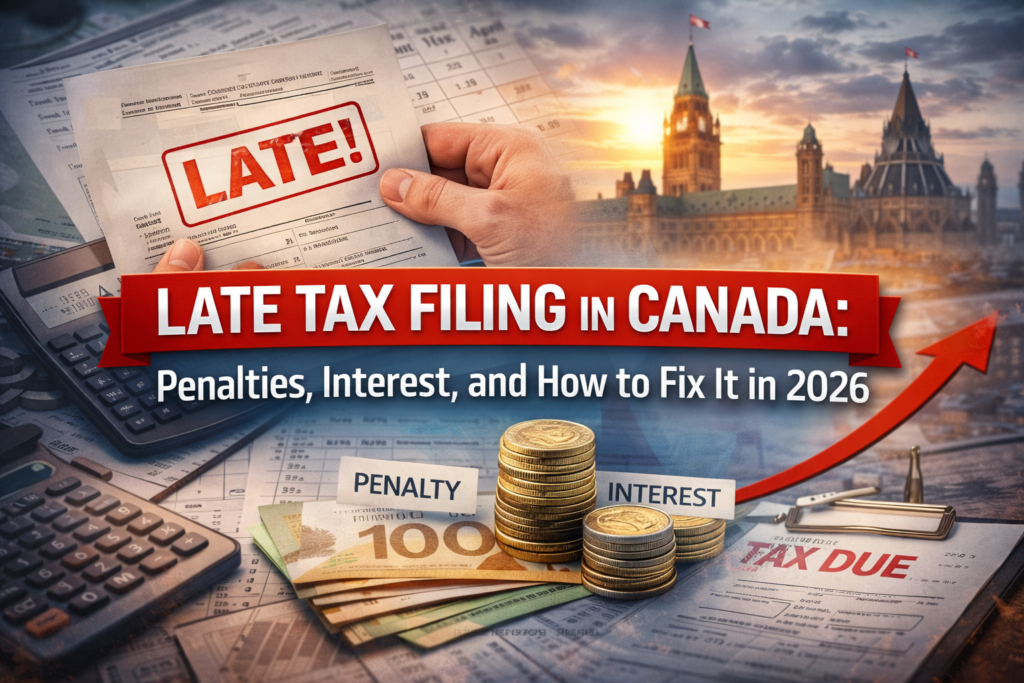
What Happens If You File Late in Canada
If you owe taxes and file your return after the deadline, the CRA will apply a late-filing penalty. This penalty is calculated as 5% of your balance owing, plus an additional 1% for each full month your return is late, up to a maximum of 12 months.
If you have a history of late filing, the penalties can increase significantly. In repeat cases, the CRA may apply a 10% penalty plus 2% per month, which can quickly add up—especially when combined with interest charges.
CRA Interest Charges in 2026
In addition to penalties, the CRA charges interest on any unpaid tax balance starting the day after the payment due date. Interest compounds daily, which means even small balances can grow quickly over time.
With interest rates remaining elevated in 2026, delaying payment is one of the most expensive mistakes taxpayers can make. Even if you cannot pay your full balance, filing your return on time can significantly reduce the overall cost.
Common Reasons Canadians Fall Behind
Late filing happens for many reasons, including:
- Self-employment income without proper tax planning
- Missing documents or poor record keeping
- Unexpected tax balances
- Life events such as illness, relocation, or financial stress
- Fear of penalties leading to avoidance
Regardless of the reason, the longer taxes remain unfiled, the more complex and costly the situation becomes.
How to Fix Late or Unfiled Taxes in 2026
The most important step is to take action as soon as possible. The CRA generally responds more favorably to taxpayers who voluntarily come forward rather than those who wait for enforcement action.
Step 1: Gather Your Documents
Collect all relevant income slips, expense records, and prior filings. If documents are missing, they can often be retrieved from CRA accounts or financial institutions.
Step 2: File All Outstanding Returns
Even if you cannot pay the full balance, filing returns stops further late-filing penalties from accumulating.
Step 3: Review Payment Options
The CRA may allow payment arrangements in certain cases. Addressing the balance early can prevent further enforcement measures.
Step 4: Consider the Voluntary Disclosures Program (VDP)
If you have significant unreported income or errors, the VDP may help reduce penalties if you come forward before the CRA contacts you.
For detailed guidance, visit late tax filing penalties in Canada.
Self-Employed and Business Risks
For self-employed individuals and business owners, late filing carries additional risks. GST/HST filings, payroll remittances, and corporate returns all have separate deadlines and penalty structures.
Failure to comply can lead to compounded penalties, audits, and in severe cases, legal enforcement. Businesses that fall behind often face cash flow challenges, making early intervention critical.
Professional support through full-service accounting and tax solutions can help businesses regain control and stay compliant moving forward.
How BOMCAS Canada Helps with Late Tax Filing
BOMCAS Canada Accounting and Tax Services specializes in helping clients catch up on unfiled taxes, reduce penalties, and deal with CRA issues efficiently.
Our services include:
- Filing multiple years of outstanding returns
- Negotiating with the CRA
- Advising on payment strategies
- Ensuring accurate and compliant filings
We also provide ongoing support through tax preparation services and income tax filing assistance to prevent future issues.
Why Acting Now Matters
Delaying action on late taxes only increases the cost and stress involved. With CRA systems becoming more advanced and enforcement more proactive, unresolved tax issues are more likely to be identified.
Taking action today can help you avoid escalating penalties, protect your financial position, and restore peace of mind.
Final Thoughts
Late tax filing in Canada is a serious issue, but it is also fixable. With the right approach and professional guidance, taxpayers can resolve outstanding obligations and move forward confidently.
If you are behind on your taxes in 2026, the best step is the first one—start now, get organized, and seek expert help to minimize the damage and rebuild compliance.









 View Our Location





 181 Meadowview Bay, Sherwood Park, AB T8H 1P7, Canada (Online Clients Only)