



There is no single income number or universal rule that tells every Canadian business owner exactly when to incorporate; the right timing depends on profit level, personal cash needs, liability risk, growth plans, and compliance readiness. Incorporating too early can add costs and complexity without real benefit, while waiting too long can mean overpaying tax and carrying unnecessary personal risk.
This guide explains the key signs that it may be time to incorporate in Canada: consistent profits, surplus cash in the business, increasing liability, plans to grow or sell, and the need for more structured tax planning. It also highlights how BOMCAS Canada helps business owners across the country evaluate their situation and transition from sole proprietorship to corporation at the right time.
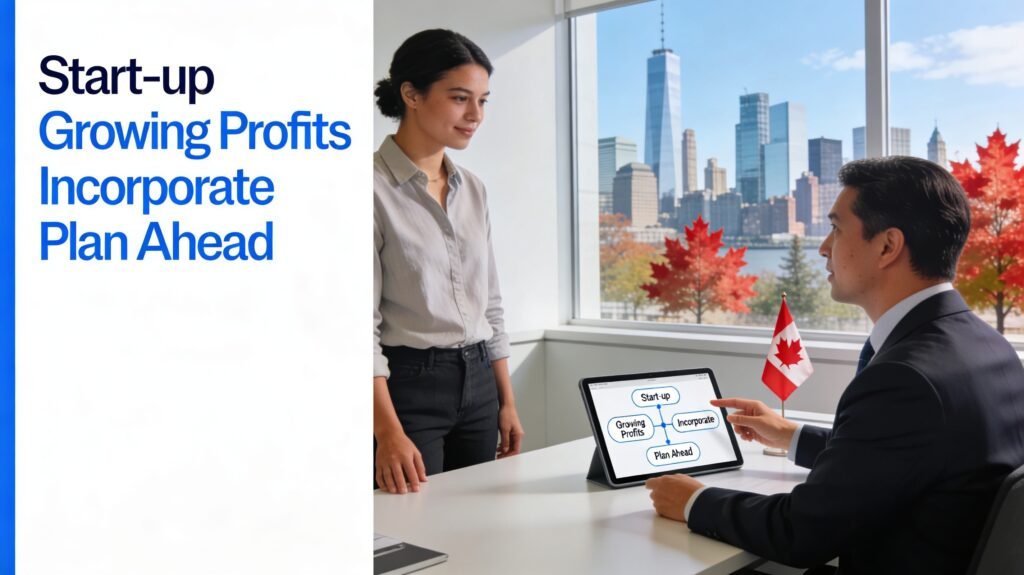
1. Incorporation in Canada: A Strategic Decision, Not Just a Milestone
Incorporation creates a separate legal entity (a corporation) that owns the business, earns the income, and pays corporate tax, while the owner is taxed only on amounts received as salary or dividends. Operating as a sole proprietor keeps the business and owner legally and fiscally the same—profits are reported directly on the owner’s personal tax return.
Because these two structures treat income, losses, liability, and succession so differently, the decision to incorporate should be based on strategy, not just hitting a certain revenue number. BOMCAS Canada supports both sole proprietors and corporations, helping clients decide when the advantages of incorporation outweigh the added administration and cost.
2. Key Factors That Drive the Decision
Before looking at specific “signs” that you may be ready to incorporate, it helps to understand the main factors that influence timing:
- Profit level and stability: Are you consistently making profits, or is income still volatile?
- Personal cash needs: Do you need every dollar of profit to pay personal bills, or can you leave money inside the business?
- Liability and risk: Are you signing bigger contracts, hiring staff, or operating in higher‑risk industries?
- Growth and exit plans: Do you plan to scale, raise capital, or eventually sell the business?
- Compliance comfort: Are you ready for corporate bookkeeping, annual returns, and structured tax filings?
BOMCAS Canada works through these factors with clients, modeling tax outcomes and mapping out the practical steps for transition.
3. Sign #1: You Have Consistent, Growing Profits
3.1 Why Profit Level Matters
When you operate as a sole proprietor, all business profit is taxed personally in the year it is earned, at your marginal personal tax rate. As your profit grows, that can push you into higher tax brackets, causing a larger portion of your income to be taxed at the highest rates.
Incorporation allows profits to first be taxed at corporate tax rates, which are often significantly lower on active business income eligible for the small business rate. Personal tax is paid later when you withdraw money from the corporation.
3.2 A Common Rule of Thumb
A widely used rule of thumb is that incorporation starts to make sense when your business earns more than you need for personal living expenses on a consistent basis. If you are leaving money in the business each year, you can often benefit from tax deferral by having that profit taxed at lower corporate rates until you need to withdraw it.
BOMCAS Canada builds side‑by‑side tax comparisons showing how much tax you would pay as a sole proprietor versus an incorporated business at different income levels, making this rule of thumb concrete for your situation.
4. Sign #2: You Are Leaving Money in the Business
4.1 Tax Deferral Through Retained Earnings
For sole proprietors, there is no concept of retained earnings: all net profit is taxed personally each year regardless of whether you withdraw it from the business bank account. Incorporation introduces the option to keep profits inside the company as retained earnings.
When profits are retained, they are initially taxed at the (usually lower) corporate rate, and personal tax is deferred until the owner takes money out as salary or dividends. This deferral allows more after‑tax cash to stay in the company for growth, investment, or future distributions.
4.2 Indicators You Are Ready for Deferral
It may be time to consider incorporation if:
- You routinely end the year with significant business cash you do not need for personal expenses.
- You want to reinvest profits into marketing, staff, or equipment.
- You are interested in building an investment portfolio inside your company.
BOMCAS Canada helps clients design salary/dividend mixes and retained earnings strategies so that tax deferral is used effectively and stays within CRA rules.
5. Sign #3: Your Business Risk and Legal Exposure Are Increasing
5.1 Liability Exposure as a Sole Proprietor
Sole proprietors have unlimited personal liability for business debts and obligations, meaning personal assets (savings, home equity, investments) can potentially be at risk if the business is sued or cannot pay its bills. This risk increases as you sign larger contracts, serve more clients, or operate in fields with professional, product, or physical risk.
5.2 How Incorporation Helps
A corporation is a separate legal entity that owns its assets, signs contracts, and carries many of the business risks in its own name. While not a total shield, incorporation generally limits shareholder liability to the amount invested in the company, subject to specific statutory director liabilities and personal guarantees.
If your business now has employees, contractors, commercial leases, or sizable projects, incorporation is often an important part of a broader risk management strategy. BOMCAS Canada frequently works alongside legal advisors to help business owners align tax planning with risk protection.
6. Sign #4: You Have Clear Growth or Exit Plans
6.1 Scaling and Raising Capital
When a business begins to scale—hiring staff, entering new markets, or investing in major equipment—incorporation provides a more flexible platform for growth. Corporations can issue shares, bring in partners or investors, and access certain types of financing more easily than unincorporated individuals.
Federal incorporation can offer name protection across Canada and may support national or international expansion plans. For owners with clear growth ambitions, incorporating early in the scaling phase can make future transactions smoother.
6.2 Planning to Sell or Transfer the Business
If you plan to eventually sell your business or pass it to family, incorporation can unlock specific tax planning tools, such as the potential use of the lifetime capital gains exemption on qualified small business corporation shares (subject to detailed rules).
Structuring the business as a corporation well before a sale or succession event provides time to meet holding period and asset‑use tests. BOMCAS Canada helps owners plan these transitions years in advance.
7. Sign #5: Your Personal Tax Bill Feels Too High
7.1 Progressive Personal Tax Rates
Canada’s personal income tax system is progressive, meaning that higher income is taxed at higher marginal rates. Successful sole proprietors can quickly find a large portion of their income taxed at top rates, leaving less after tax for reinvestment.
7.2 How Incorporation Can Help
By routing business income through a corporation, owners can split the tax hit between corporate and personal levels and potentially shift some income to future years. In many situations, this can lower the combined annual tax burden, especially when not all profits need to be withdrawn personally.
BOMCAS Canada uses detailed tax projections to show clients how different structures and compensation strategies would affect their total tax, helping them decide whether incorporation is the right lever to pull.
8. When It May Be Too Early to Incorporate
Incorporation is not always the right move, especially in the early stages of a business. It may be too early to incorporate if:
- You are still testing your business idea with minimal revenue.
- You expect start‑up losses and want to use them to reduce other personal income.
- You need all of your business income to live on.
- You are not ready for added accounting, legal, and administrative responsibilities.
Sole proprietorship often makes sense in the first phase, because losses can be applied directly against your other income and compliance is simpler. BOMCAS Canada regularly advises clients to stay as sole proprietors for a period before revisiting incorporation once profit and direction are clearer.
9. Practical Milestones and Checkpoints
While there is no universal magic number, certain milestones commonly trigger incorporation discussions:
- Your business generates steady annual profits beyond your personal spending needs.
- You begin hiring employees or engaging multiple contractors.
- You sign larger contracts or supply agreements with bigger liability exposure.
- You are considering raising outside capital or bringing in partners.
- You are thinking seriously about a future sale or succession plan.
When one or more of these apply, a consultation with an accountant is typically warranted to evaluate the tax and legal implications of incorporating. BOMCAS Canada offers these evaluations to business owners across Canada via virtual meetings and phone consultations.
10. The Transition: Moving from Sole Proprietor to Corporation
10.1 Planning the Timing
Transitioning from sole proprietorship to corporation involves choosing a start date for the new corporation, closing or winding down the sole proprietorship, and transferring assets and operations.
Owners often choose to incorporate at the beginning of a new fiscal year or calendar year to simplify tax reporting. However, incorporation can occur at any point in the year, provided you understand how income and expenses will be split between the sole proprietorship period and the corporate period.
10.2 Tax and Legal Steps
A tax‑efficient transition usually involves:
- Registering the corporation federally or provincially.
- Opening new business bank accounts for the corporation.
- Transferring key assets (equipment, goodwill, contracts) to the corporation, often using a tax‑deferred rollover under the Income Tax Act.
- Updating GST/HST, payroll, and other registrations.
- Implementing new bookkeeping and payroll systems.
BOMCAS Canada assists clients with planning and coordinating these steps, working alongside legal counsel where necessary, and ensures that both the final sole proprietor return and the first corporate return are prepared accurately.
11. How BOMCAS Canada Helps You Decide When to Incorporate
BOMCAS Canada is a Canadian accounting and tax firm that provides bookkeeping, payroll, corporate and personal tax preparation, GST/HST filings, and tax planning services for sole proprietors, corporations, and individuals across the country. The firm works with clients in many industries and at different stages of growth, from side businesses to established corporations.
When business owners ask “When should I incorporate?”, BOMCAS Canada typically:
- Reviews current and projected income, expenses, and personal cash needs.
- Analyzes tax payable as a sole proprietor vs as a corporation at different income levels.
- Assesses liability, risk exposure, growth goals, and succession plans.
- Estimates the extra costs and responsibilities of incorporating.
- Recommends whether to incorporate now, wait, or plan for a future date.
Owners who decide to incorporate can then rely on BOMCAS Canada to handle corporate setup support from a tax perspective, new bookkeeping systems, payroll, and year‑end filings. Business owners can start this process by visiting the main BOMCAS Canada site at https://bomcas.ca and requesting a consultation.
12. Key Takeaways for Canadian Business Owners
- There is no one-size-fits-all income threshold for incorporation in Canada; the right timing depends on profit levels, risk, growth plans, and personal circumstances.
- Incorporation tends to make more sense when you have consistent profits, surplus cash staying in the business, and rising liability or growth ambitions.
- Sole proprietorship can be preferable in early, loss‑making, or experimental phases, when simplicity and the ability to use losses personally are more valuable.
Because this decision affects both current tax and long‑term planning, working with an experienced accounting firm like BOMCAS Canada helps ensure you incorporate at the right time, for the right reasons, with a clear implementation plan. Starting at https://bomcas.ca, business owners across Canada can access expert support to analyze their situation and move forward confidently.










 View Our Location





 181 Meadowview Bay, Sherwood Park, AB T8H 1P7, Canada (Online Clients Only)